People often remember you by your visiting card. If you’re a business owner, freelancer or going to networking events, your card should look professional and be easy to carry. Choosing the right Visiting Card Size is one of the most important parts of creating a great card.
The correct size allows your card to fit into wallets, keeps the balance of the design and gives enough space for your contact details. While digital or nfc business cards are common today, printed business cards are still valuable in face-to-face meetings.
In this guide, we’ll walk you through everything you need to know about Visiting Card Size — standard sizes, design tips, printing tips and how to choose the right size for your brand.
Why Visiting Card Size Matters
Most people think of colours and logos but the size of the Visiting Card is equally important. A card that is too big may not fit in a wallet. If the card is too small, there may not be enough room for your details.
The right size helps you:
- Make a good first impression…
- Make your information easy to digest
- Make your card convenient to carry
- Improve the design as a whole
- Branding space
The first step to make a card that people will keep and not throw away is the right Visiting Card Size.
Standard Visiting Card Size
Card sizes differ from country to country, but there are a few standard sizes that are accepted worldwide.
Indian Standard Size
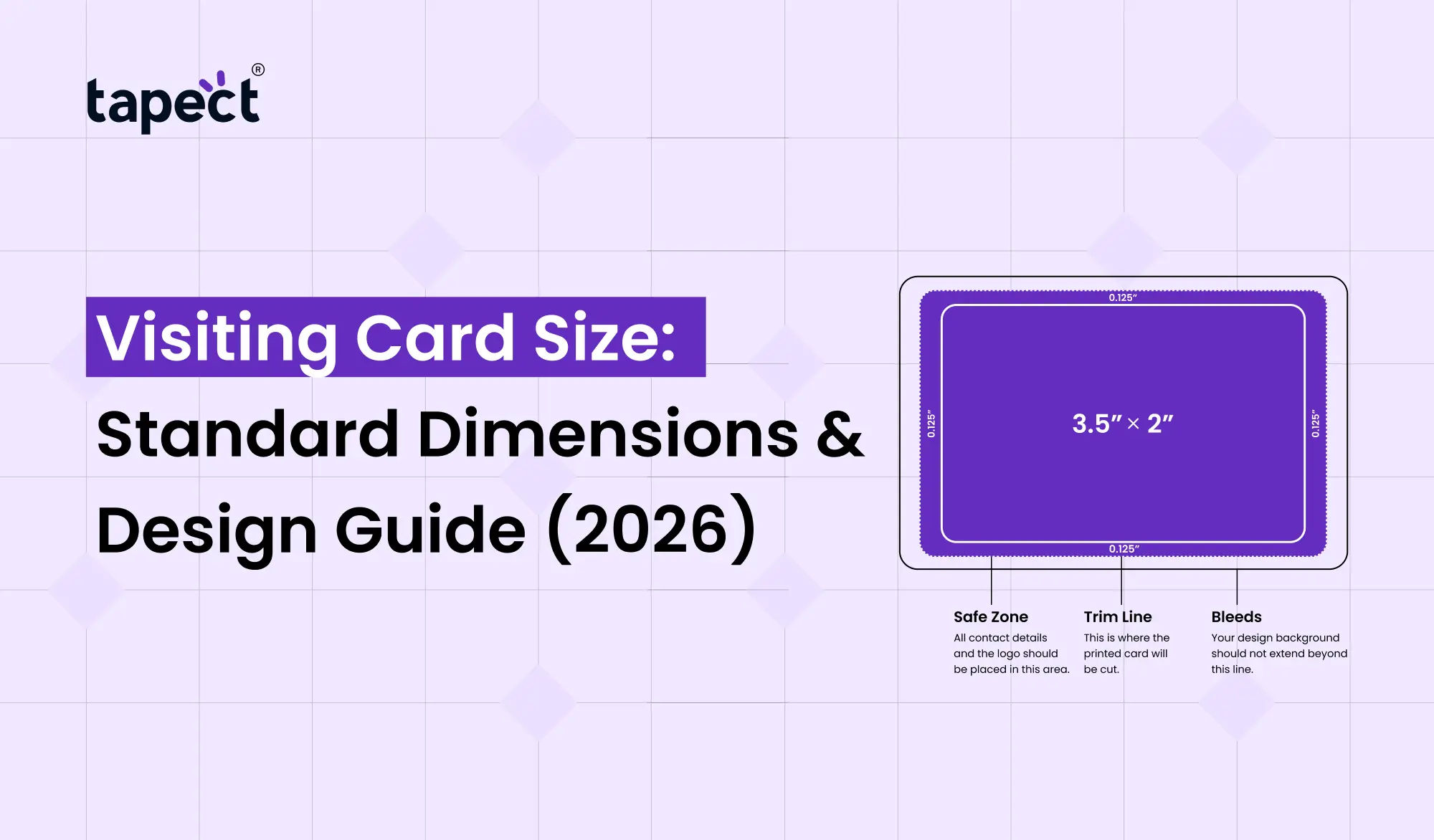
The standard Visiting Card Size in India is:
3.5 x 2 in (89 x 51 mm)
This size easily fits in wallets and card holders. Most print companies recommend this format too.
International Size Standard
Used by many countries:
Size: 89 x 51 mm (3.5 x 2 in)
or
55 x 85 mm
Both choices are perfectly okay for business networking.
Standard Visiting Card Dimensions
The dimensions of a visiting card are the width and height of the card.
Common business card sizes include:
- 89 × 51 mm
- 85 × 55 mm
- 90 × 50 mm
These business card sizes give you enough space for your logo, name, contact details and QR code, but keep the design clean.
Business Card Size vs Visiting Card Size
Many people have a question is there any difference between business card size and Visiting Card Size.
Easy Answer.
The size of a business card usually follows the same measurements as a visiting card. People just call it by different names in different countries .
If you call it a Business Card Size or a Visiting Card Size, the standard dimensions are nearly same.
What Information Should a Visiting Card Include?
A good card contains only the most pertinent info.
Your card should contain:
- Name
- Job title
- Company name
- Mobile number
- Email address
- Website
- Office address (optional)
- QR code
- Social media (if useful)
Leave enough white space so your card doesn’t look busy.
Best Layout for Visiting Card Size
A well-balanced layout will make your card easier to read.
Front Side
Include:
- Company logo
- Name
- Job title
- Contact number
Back Side
- QR code
- Website
- Social links
- Brand message
This layout is a perfect fit for today’s digital business card solutions.
Visiting Card Size for Digital Business Cards
The size of a digital visiting card is different, because it is designed for mobile screens and not paper.
There is no specific size of digital visiting card, but most platforms use a vertical layout that fits smartphones.
Size of digital visiting card should be:
- Quickly load
- Show clearly on any device
- Add clickable buttons.
- Saving a support contact
- Instantly Share
Now many businesses are using printed cards together with a digital business card.
Why Digital Business Cards Are Growing
The digital business card has become more and more popular, as it’s easier to share information these days.
Benefits include:
- Easy updates
- Share immediately
- No printing cost
- Green
- Improved customer experience
People have two easy ways to connect with you – a printed card with a QR code that takes them to your digital business card.
NFC Business Card and Standard Size
Modern nfc business cards are usually the same Visiting Card Size as traditional cards.
The only difference is you embed an NFC chip in the card.
An nfc business card lets users tap their phone to instantly access your contact information, without having to type a single thing.
Many professionals now use a nfc business card in combination with a qr code for maximum compatibility.
Choosing the Right Material
The material is important as well as size.
Popular picks include:
Paper Cards
Inexpensive and abundant.
Matte Finish
Professional appearance, less glare.
Gloss Finish
Premium feel and bright colours.
PVC Cards
Water resistant. Long lasting.
Metal Cards
Choice of luxury brand premium.
Wooden Cards
One of a kind and eco-friendly.
The material should match your business image while the Visiting Card Size should be comfortable to handle.
Design Tips for the Perfect Visiting Card
A beautiful card is simple and easy to read.
Use Readable Fonts
Avoid very small text.
Keep White Space
I don’t know what to say about these things.
Choose Brand Colors
Use the same look and feel for your website and logo.
Add a QR Code
Let people scan & save your details on the spot.
Use High-Resolution Graphics
Images are low quality which makes the card look unprofessional.
Print a Sample First
Proof your design before printing large quantities.
Common Mistakes to Avoid
Many businesses make simple mistakes that cheapen their card.
Don’t Make These Mistakes:
- Selecting the Incorrect Visiting Card Size
- Micro Fonts
- Too much information
- Poor picture quality
- Incorrect contact details
- Poor print quality
- Disregarding bleed margins
- Not including QR code testing
Clean and simple design is always better.
Why Businesses Choose Tapect
Looking for a smarter way to network? Tapect provides modern networking solutions that combine traditional and digital technology.
Create a professional digital business card with Tapect, share it instantly with a QR code, and upgrade to a nfc business card for contactless networking. This allows you to get your message across quickly and leave a lasting impression.
Tapect makes networking simple and modern for a startup, freelancer, sales professional or business owner.
FAQs
1. What is the size of visiting card?
In India the standard Visiting Card Size is 89 × 51 mm (3.5 × 2 inches).
2. What is the standard size of visiting cards?
Standard visiting card sizes are 89 × 51 mm, 90 × 50 mm and 85 × 55 mm.
3. Business Card Size Is Same As Visiting card Size?
Yes. In most of the countries, business card and visiting card size are almost same.
4. What is the size of a digital Visiting Card?
A digital visiting card does not have a standard size. It is optimised for viewing on mobile phones and tablets.
5. Is it possible to use both a printed card and a digital business card?
Yes. Many professionals have a printed card with a QR code that connects to their digital business card for easy sharing.
6. Should I buy an NFC business card?
Yes. An nfc business card allows you to share your contact info with a tap, making it easier & faster to network.
Conclusion
Selecting the right Visiting Card Size is more important than many people think. A good-sized card looks professional, fits easily in wallets, and has enough room for your contact details without feeling crowded.
It’s either a traditional printed visiting card, a modern digital business card or a smart nfc business card, using the right size and a clean design will make a strong first impression. Let people reach out to you anytime they want. Use your printed card with digital features such as QR codes or NFC.
Call to Action
Ready to improve your networking skills? With Tapect you can create smart digital business cards and NFC business cards to share your contact details in a fast, easy and professional way. Discover Tapect’s solutions today and make every meeting a lasting business connection.