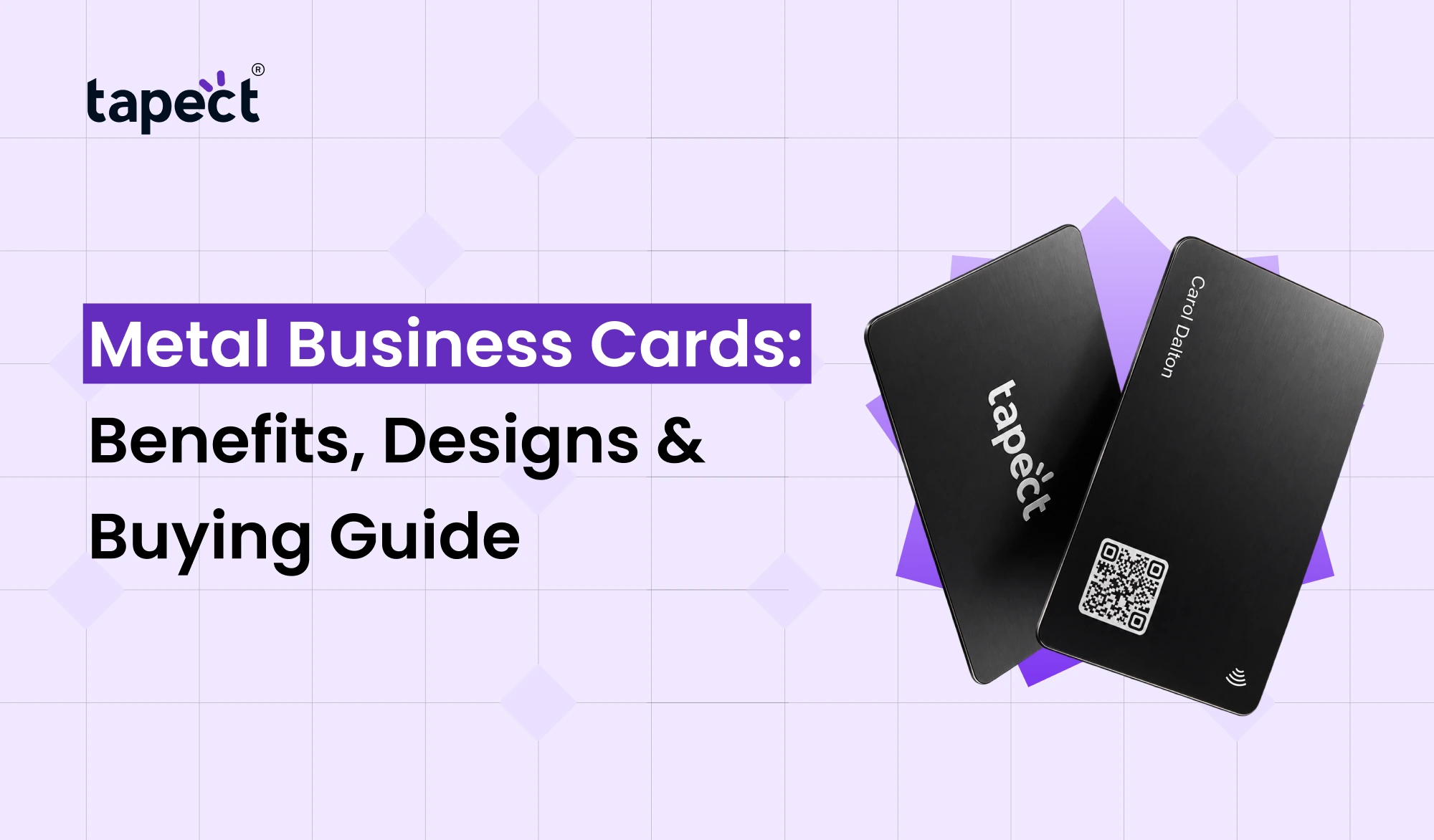
When you’re with a new client, you want to be memorable. And a good business card can help make that happen. Paper cards are the norm, but metal cards provide something unique. They feel good, they look good and they give people a reason to give us a second look.
Metal Business Cards are an excellent option for business owners, company executives, salespeople, and anyone who wants to make a memorable first impression. They are available in all finishes, shapes and styles so you can pick a design that fits your brand.
In this guide we’ll cover main benefits, popular designs, materials and buying tips. We’ll also discuss how Tapect can help you create a more modern networking experience.
What Are Metal Business Cards?
Metal Business Cards are business cards made of stainless steel, aluminium or other metals rather than paper or plastic. This may include your name, company logo, phone number, email address, website and other contact information.
These cards are known for their solid feel and professional appearance. And you can pick from three finishes: silver for a clean look, black for a bold look and gold for a premium feel.
“Many professionals also use a combination of physical cards and digital contact sharing. For example, a card might have a QR code that links to a contact page or a digital business card.
This gives people a simple way to learn more about your business after they’ve met you.
Benefits of Metal Business Cards
There’s more to a business card than its appearance. It should help people remember your brand and make it easy to get in touch with you later.
1. Make a Strong First Impression
When you’re meeting a new customer or business partner, first impressions count. A metal card provides a different experience than a regular paper card, which can make your introduction more memorable.
Add a clean logo, simple text and a finish that matches your brand. This is a great fit for business owners, consultants, real estate agents and company executives.
2. Enjoy Better Durability
Paper cards can get bent, torn, or otherwise damaged from being stored for a long time in a wallet. Depending on the thickness and finish, metal cards are usually more resistant to bending and everyday wear.
Stainless steel business cards are a popular choice for those who need a tough and long-lasting card.
However, metal cards can still be scratched so it is worth checking the material and coating before placing an order.
3. Give Your Brand a Premium Look
Even when you’re not there to explain what you do, your business card is your firm. A well designed metal card can give your brand a professional and thoughtful look.
For instance, a black card with silver lettering might be suitable for a tech company, whereas a gold finish could be more fitting for a luxury service provider.
The trick is to choose a design that fits your business, not to go overboard with the decorations.
4. Help People Remember You
People tend to walk away with a bunch of paper cards at networking events. A card of a different material and design can make your card stand out from the rest.
Metal Business Cards are great for trade shows, business meetings, conferences and client appointments.
Easy to read contact details and a clear logo also help people remember who you are and what your business offers.
5. Support Modern Networking
You don’t have to choose between a physical card and sharing your contacts online. Both can help make networking a bit easier.
For instance, you can add a QR code on your card that will direct to your website, contact details or online profile. If the card and service support it, you can try one that uses NFC, too.
This approach links a physical introduction to your online presence.
Popular Metal Business Card Designs
The right design depends on your industry, audience and brand style. Here are some options to consider.
Stainless Steel Designs
Stainless steel business cards are well known for their durable material and elegant look. They are available in brushed, polished or dark finishes.
They are a great choice for technology companies, consultants, engineering firms and professionals who want a modern look.
Black Metal Cards
Bold, simple style comes in black cards. White, silver or gold text provides a strong contrast to the dark surface.
This design is perfect for creative agencies, premium services and business owners that want a modern logo.
Gold and Silver Finishes
Gold finishes add a touch of luxury to a card, whereas silver finishes give a clean, professional look.
Before ordering, find out whether the finish is a coating or some other type of surface treatment. This may affect the appearance of the card and the performance of normal use.
Custom Logo Designs
Including your company logo helps people relate the card back to your brand. Depending on material / supplier, you can opt for laser engraving, cut-out details or printed graphics.
And here is the text: Your name, company, role, and primary contact method should be easy to find.
Metal Business Cards vs. Paper Cards
They both have their place, but serve slightly different needs.
- Appearance: Metal cards offer a distinctive look, while paper cards suit traditional business settings.
- Durability: Metal cards are usually more resistant to bending and tearing.
- Cost: Paper cards generally cost less, especially for large orders.
- Customization: Both options support different layouts, colors, and branding styles.
- Everyday use: Paper cards are lightweight and easy to distribute, while metal cards can be useful for selected clients and important meetings.
Maybe paper cards are more practical for general use, if you meet a lot of people every day. If you want to impress key contacts and do it in a way that lasts then maybe the extra cost of a metal card is worth it.
How to Choose the Right Metal Business Cards
Please take some time to compare the available options before you place your order. The least expensive card might not always give you the finish or quality you want.
1. Select the Right Material
Stainless steel is a popular option for a premium, durable feel. Another choice is aluminium which is often lighter .
If you want a durable card with a polished look, stainless steel business cards may be a good choice. Ask supplier about thickness, weight, edges, surface treatment.
2. Choose a Practical Design
Your card should look good but not make your details hard to read.
Include the most helpful info:
- Your name and job title
- Company name and logo
- Phone number or email address
- Website or portfolio link
- QR code, if needed
Don’t include every social media account if it makes the design crowded.
3. Check Printing and Engraving Quality
Ask for samples or clear photos of the product before you buy. Look for clean text, smooth edges and a uniform finish
A poorly worded stainless steel visiting card can look less professional even if the material is of high quality.
If you are able, get to see a sample with your own logo before you place your bulk order.
4. Compare Prices and Order Quantities
Metal cards tend to be pricier than paper cards. Prices will vary depending on the material, the thickness of the card, finish, customisation and quantity.
Ask suppliers for the total cost, including set-up fees, shipping and any charges for custom designs.
It’s also good to ask about their production time and replacement policies if a card comes damaged.
5. Think About Digital Features
If you want to get beyond the basics of contact details, add a QR code or dabble with NFC.
A NFC business card can let someone open a linked profile by tapping a compatible smartphone on the card. You can also get the same information using a QR code.
Test the digital feature out before you purchase. I would like to know if we can update the profile later on and if there is a subscription going on.
How Tapect Can Help With Modern Networking
Tapect helps professionals discover digital business card solutions that make sharing contact information easier. Instead of depending on print information, you can develop a digital profile to give helpful information to clients and business contacts.
Your digital business card can include your name, company, contact details, website, social media links, and more.
Here are some ways this approach can help your networking:
- Share contact details easily: Give people a convenient way to access your information.
- Connect physical and digital networking: Use a QR code or supported NFC product to direct people to your profile.
- Keep your details current: Update information on your digital profile without needing to reprint a physical card, where the service supports profile updates.
- Show more about your business: Add useful links that help potential customers understand your services.
Tapect lets you find a networking setup that works for your business and the way you meet new clients.
Common Mistakes to Avoid When Buying Metal Cards
You can’t make your card effective by using a premium material alone. Watch out for these common mistakes:
- Choosing a design with text that is too small.
- Adding too many colors, icons, or contact details.
- Ignoring the weight and thickness of the card.
- Ordering a large quantity without checking a sample.
- Selecting a finish without asking about scratches or wear.
- Adding a QR code without testing it on different phones.
- Buying an NFC product without checking compatibility and digital profile costs.
Unnecessary decoration will usually not serve you better than a simple design, reliable quality and useful contact options.
FAQs
1. Are metal business cards worth it?
If you need a special card for important meetings, networking events or premium clients, they can be worth buying. Decide based on your budget and frequency of card distribution.
2. What is the best metal for business cards?
Stainless steel is popular due to its strength and professional appearance. If you want something lighter aluminium might be for you. Best Material: Depends on your budget and design requirements.
3. Can a metal business card have a QR code?
Yes. A QR code can connect to your website, contact information, portfolio or digital profile. The code needs space and contrast to scan properly.
4. What is the difference between an NFC business card and a metal card?
The material is described by a metal card, the contact-sharing feature by an NFC business card. A card can be both, but you’ll need to verify that the product you’re interested in actually supports NFC.
5. Are metal business cards more expensive than paper business cards?
Yes, generally. Metal cards are generally more expensive because of the material and the manufacturing process. Final price depends on finish, customisation, quantity and supplier.
6. Can I change the information on a metal business card?
Printed information is generally not alterable after printing. But if your card is linked to an editable digital business card, you might be able to update the online profile without having to replace the physical card.
Conclusion
Metal Business Cards are an unusual way of introducing yourself and representing your brand. They are a good choice for professionals wanting to make their cards stand out since the cards blend a premium look with durable materials.
Shop around for materials, finishes, prices and customisation options before you buy. Select a design that will keep your contact details clear and suit your business identity.
You can also link your physical card to digital contact sharing to make it easier for people to learn about your services and get in touch with you later.
Want to take your networking to the next level? Explore Tapect digital business card solutions and get a practical way to share your contact details, meet new people and make every business introduction count.